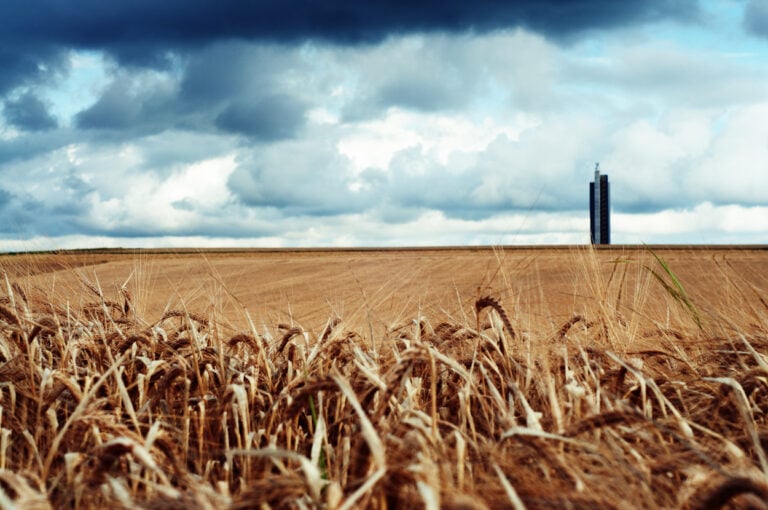
Small farmers lose in supermarket expansion
SOMO research concludes that free trade in fruit and vegetables has a negative impact on small farmers and producers in developing countries.
This week, WTO negotiators have to make difficult decisions concerning the liberalisation of trade in agriculture and services, including retail sales. In this context, SOMO’s report is a critical analysis of the influence of trade and retail on production conditions in the fresh fruit and vegetables chain. Both in the global North and South, supermarkets own a growing part of the market. In the Netherlands, more than 80% of all fresh fruit and vegetables are sold at supermarkets, of which the 5 largest own more than 50% of the market. The increasing concentration of supermarkets has an effect deep into the supply chain as supermarkets are increasingly able to stipulate who produces what, where and for what prices. The consequences for small farmers are significant; they cannot meet the requirements of the supermarkets, who want products for a low price, of the best quality, in large quantities and throughout the whole year. Under the pressure of these demands, the labour agreements of the employees on large plantations deteriorate. SOMO’s report shows that current initiatives for Corporate Social Responsibility are insufficient to handle these problems.
With case studies in Senegal and Indonesia, and based on literature research, SOMO’s report reveals that small farmers and producers in developing countries, as well as in Europe, have diminishing opportunities to sell their produce. International legislation and treaties such as the WTO encourage the increasingly concentrated power of supermarkets by enforcing permanent market access. In developing countries the consequence is often the domination of the financially strong foreign multinational supermarket chains. This is a threat for the local producers who cannot meet the new requirements.
In order to map the international fruit chain and to put the topic on the public agenda, SOMO, in cooperation with ICCO, is organising a debate concerning the chances for poverty reduction in the fruit sector, particularly among small producers, and the role of consumers, shops and government. The debate will be held on September 21st, 2006, at the Rode Hoed in Amsterdam, the Netherlands.
Related news
-
JBS’s global tax avoidance hub: Luxembourg Published on:
 Sanne van der WalPosted in category:Publication
Sanne van der Wal
Sanne van der WalPosted in category:Publication
Sanne van der Wal
-

-
Hungry for profits Published on:
 Vincent KiezebrinkPosted in category:Publication
Vincent Kiezebrink
Vincent KiezebrinkPosted in category:Publication
Vincent Kiezebrink